Crack filling or patching: which does your asphalt need?
By Parukh Construction ·
The short answer
Fill single cracks, even long ones, to keep water out. Patch areas with alligator cracking (a web of small connected cracks), potholes or sunken spots, because those mean the base underneath has failed. Filling can't fix a failed base. Patching cuts it out and rebuilds it.
Read the crack before you fix it
Cracks are your asphalt telling you something. Most of the time it's a polite note. Sometimes it's a strongly worded letter.
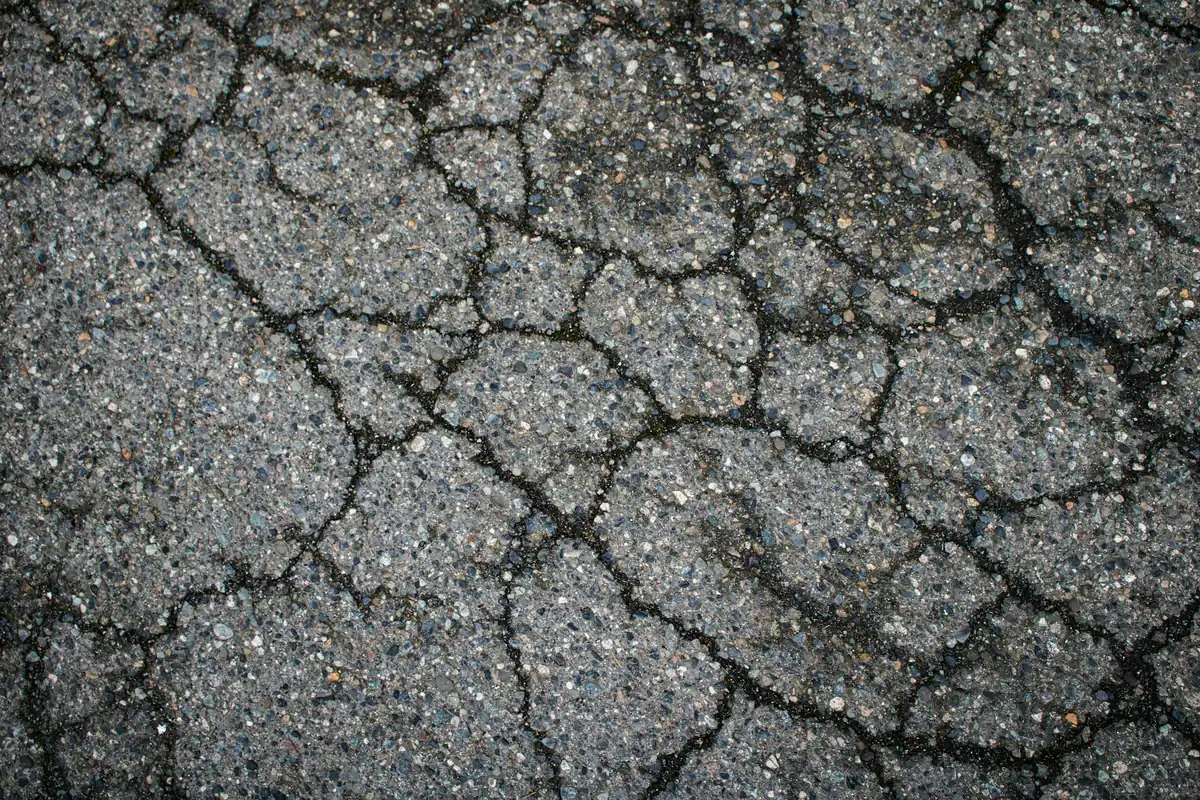
A single line, straight or wandering, usually comes from the asphalt ageing, shrinking in the cold or the ground moving a little. The base is still fine. A tight web of cracks that looks like alligator skin is different. That's the surface breaking up because the support underneath has gone soft.
When crack filling is the right call
Single cracks get cleaned out and filled with crack sealant. It's quick, it's cheap, and it stops rainwater running down into the base. In Charlotte, with heavy summer storms and clay soil that loves to hold water, that matters more than people expect.
- Single cracks, even long ones
- Cracks along the edge where the driveway meets the lawn
- Joint cracks between old and new asphalt
- Any crack you're about to sealcoat over
When it needs a patch instead
If the area is alligator cracked, sunken, holding water or already a pothole, filling won't help. You'd be putting a plaster on something that needs stitches.
A proper patch cuts the damaged asphalt out to clean edges, fixes the base below, then fills it with hot asphalt compacted in layers. The edges get sealed so water can't sneak in around it.
Why doing it early saves money
Every crack left open is a funnel for rain. Water softens the base, traffic pushes down on the soft spot, and the crack becomes a pothole. Filling a crack costs a fraction of patching the hole it turns into, and patching costs a fraction of a repave.
The cheapest asphalt work is the work you do before you need it (a sentence nobody has ever put on a bumper sticker).
Quick questions
Can alligator cracking be crack filled?
Not effectively. Alligator cracking means the base has failed, so the area should be cut out and patched.
Should cracks be filled before sealcoating?
Yes. Sealcoat does not fill cracks, so they should be filled first as part of the job.
Want it looked at?
Parukh Construction does crack filling across Charlotte, with free estimates. Call (704) 293-7661 or see the crack filling page.